Canada’s municipal water, waste and energy infrastructure is in poor shape with ~$106B billion in replacement needs, but treating it as an integrated “water–waste–energy nexus” investment can cut costs, improve resilience, create jobs and generate new revenue — turning a crisis into an economic competitiveness opportunity.
Canada faces a staggering reality that should concern every citizen, business leader and policymaker: the Canadian Infrastructure Council estimates that our municipal water infrastructure is in poor or very poor condition with an estimated replacement value of over $106 billion. For many, this figure represents an insurmountable crisis, a fiscal burden that threatens our economic competitiveness and quality of life.
But what if we've been looking at this challenge all wrong? What if Canada's infrastructure deficit actually represents one of the greatest economic opportunities our nation has seen in a generation?
The thesis is straightforward: by embracing integrated water-waste-energy solutions, we can simultaneously address this massive infrastructure deficit while driving unprecedented economic prosperity across our country. We can turn a crisis into a catalyst for growth, innovation and competitive advantage that positions Canada as a global leader in sustainable infrastructure.
The Sobering Reality
Let's be clear about what we're facing. The infrastructure deficit isn't evenly distributed — it's concentrated in the very systems that make modern life possible. Our water and wastewater systems alone face backlogs in the tens of billions. Waste management facilities are aging and reaching capacity just as we're demanding more from them — higher diversion rates, resource recovery and emissions reductions. Energy systems require comprehensive modernization to meet our decarbonization commitments.
In municipalities from coast to coast, critical assets are operating beyond their design life. We're not just talking about reduced efficiency—we're talking about assets designed to last 50 years now approaching 70 or 80 years of service. The cost of doing nothing far exceeds the cost of action. Service disruptions and emergency repairs cost three times more than planned replacements.
We've all seen the headlines—major water main breaks in Montreal and Calgary, treatment plant failures in smaller communities and waste management crises from Vancouver to Halifax. But beyond the immediate disruptions lie deeper consequences: public health risks, environmental damage and severe impacts on economic competitiveness. Businesses need reliable infrastructure. Without confidence that water will flow, waste will be managed and energy will be available, they will set up elsewhere. Growth stalls. Development stops. Our communities fall behind.
Climate vulnerability compounds the challenge. Aging infrastructure is less resilient infrastructure. Every year we delay makes us more vulnerable to the extreme weather events that are becoming our new normal — from flooding in British Columbia to ice storms in Eastern Canada.
Why Traditional Approaches Have Failed
So why haven't we solved this already? The problem is that traditional approaches are fundamentally inadequate. We plan in silos — water departments don't talk to waste divisions, who don't coordinate with energy utilities. We invest reactively, fixing what breaks rather than strategically building what we need. We miss enormous integration opportunities because we're not looking for them.
Critically, we consistently underestimate the economic multiplier effects of infrastructure investment. We treat it as a cost center rather than recognizing it as the economic growth driver it truly is. This mindset has left Canada with an infrastructure deficit that threatens our prosperity and global competitiveness.
The Water-Waste-Energy Nexus: A Transformative Approach
The solution lies in a concept that should fundamentally reshape how we think about municipal infrastructure: the water-waste-energy nexus. These systems aren't separate — they're deeply interconnected. Water treatment requires 30-40% of a typical municipality's energy consumption. Meanwhile, the wastewater we treat contains significant energy potential through biogas production. Waste management facilities are energy-intensive operations, while energy production itself requires water and generates waste.
When we recognize these interconnections, integration opportunities become obvious. Co-located facilities can share infrastructure, reducing capital costs by 15-25%. Resource recovery across systems turns waste into valuable inputs. Operational efficiencies multiply when systems are managed holistically, with some municipalities achieving 20-35% operating cost reductions. Resilience increases through redundancy and flexibility.
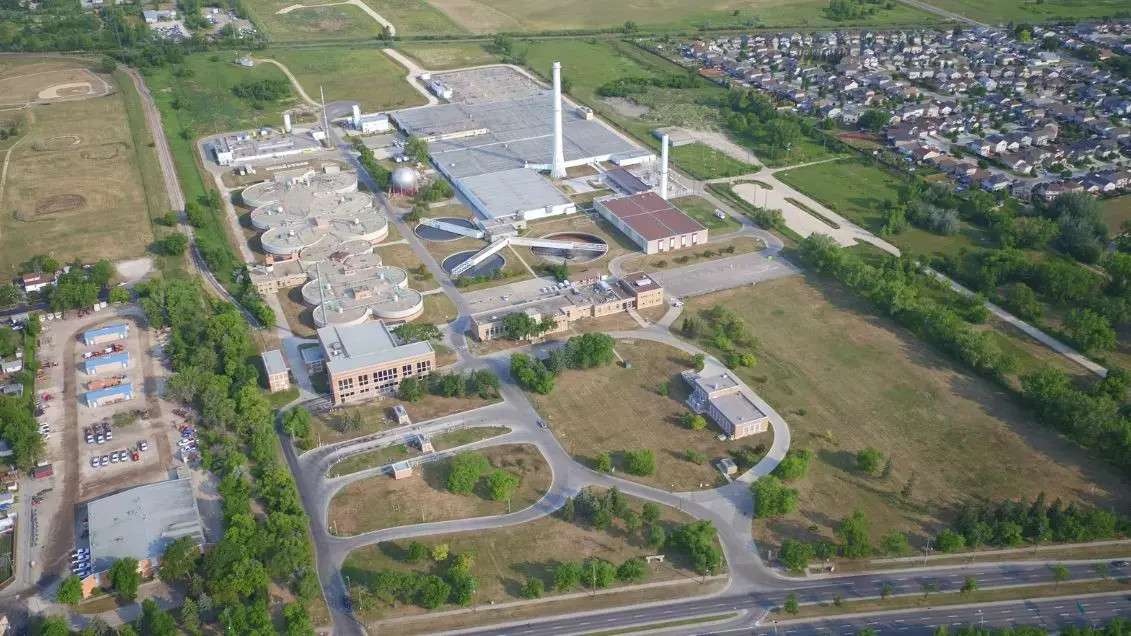
This isn't theoretical. Across Canada, we're seeing nexus thinking in action. Toronto's Ashbridges Bay is turning half of its biosolids into high-value fertilizer products for farms, creating a revenue stream while solving a waste management challenge.
Infrastructure as Economic Growth Driver
Here's what should excite every economic development officer, municipal chief administrator officer and provincial and federal finance ministers: infrastructure investment is one of the most powerful job creation tools available. Every $1 million invested in infrastructure creates 15-20 direct jobs — construction workers, equipment operators, engineers, technicians — good-paying jobs that support families and communities across Canada.
But it goes beyond construction. Infrastructure investment stimulates the entire supply chain — equipment manufacturing, technology development, materials production. It drives demand for professional services: engineering firms, consulting companies and project management specialists. This is an economic stimulus that builds lasting value, not just short-term activity.
The direct benefits are just the beginning. Infrastructure spending has a multiplier effect of $1.50 to $2.50 for every dollar invested. That initial investment ripples through the economy — local procurement, business development, increased property values and expanded tax bases. Reliable, modern infrastructure attracts new businesses and investment. Companies choose locations based on infrastructure quality. When we provide that confidence, we win investment that might otherwise go to our country’s competitors.
Building Canada's Competitive Advantage
By leading in integrated infrastructure solutions, Canada can create lasting competitive advantages. We can become an innovation hub for environmental technologies. The expertise we develop here can be exported globally — Canadian solutions solving infrastructure challenges worldwide. We can position ourselves as a global circular economy leader, attracting investment, talent and recognition.
This isn't just about fixing what's broken. It's about building competitive advantages that will drive Canada's competitive economy for decades. The fiscal case is equally compelling. Proactive infrastructure investment reduces emergency repair costs — remember, those cost three times more than planned replacements. Integration and efficiency reduce operating costs by 20-35% in many cases. Resource recovery generates new revenue streams — energy sales, recovered materials, valuable nutrients.
And we can't ignore climate adaptation. Every dollar invested in resilient infrastructure saves $4-6 in avoided future damage costs. That's not speculation — that's data from communities that have learned the hard way, from Fort McMurray's wildfire recovery to coastal communities facing sea-level rise.
Integrated Solutions: From Theory to Practice
So how do we actually do this? Start with water infrastructure. Smart water systems using real-time monitoring, leak detection and predictive maintenance can transform operations. We're talking about sensors, data analytics and artificial intelligence (AI) identifying problems before they become failures. In South Bend, Indiana, advanced sensors and analytics were deployed that have cut overflow volumes by more than a billion gallons annually, improving water quality and reducing projected capital costs by almost $500 million under the city’s revised long-term control plan. Energy optimization through high-efficiency pumps, process optimization and renewable energy integration can reduce energy costs by 20-30%.
For waste infrastructure, organics processing through anaerobic digestion and composting doesn't just divert waste from landfills — it produces biogas for clean energy and valuable compost products. The City of Toronto is converting biogas generated from organics processing into renewable natural gas. Advanced materials recovery using AI-powered sorting and emerging chemical recycling technologies can dramatically increase recovery rates while reducing contamination. This isn't your grandfather's recycling facility—this is high-tech manufacturing creating value from materials we used to bury.
Energy infrastructure integration multiplies these benefits. District energy systems can capture waste heat from treatment plants, providing low-cost heating and cooling to nearby developments — particularly valuable in Canada's climate. Metro Vancouver's waste-to-energy system is being converted to a district heating system that will nearly triple its current energy production while retrieving valuable metals that would otherwise be sent to landfill.
But the real magic happens when we integrate across sectors. Resource recovery parks co-locate water, waste and energy facilities to maximize synergies. Industrial symbiosis creates waste and energy exchanges between facilities, turning one operation's waste into another's feedstock. These aren't theoretical savings — they're being achieved in communities that have embraced integrated approaches.
Enabling the Transformation
The question is: how do we enable this transformation nationally? Let's start with financing. Federal programs like the Investing in Canada Infrastructure Program provide significant funding for eligible projects. Provincial funding opportunities and green bonds offer additional capital sources. Municipalities themselves are increasingly accessing capital markets through green bonds, often at favorable rates due to investor demand for sustainable investments.
Public-private partnerships and alternative delivery models can bring private capital, expertise, and innovation to infrastructure projects. The capital is available. We need to structure projects that can access it effectively.
But financing alone isn't enough. We need policy and regulatory support that enables rather than hinders integrated approaches. We need integrated infrastructure planning requirements that force us to look across silos. We need streamlined approvals for co-located facilities—right now, integrated projects often face more regulatory hurdles than separate facilities, which makes no sense.
Performance-based regulations should encourage innovation rather than prescribing specific technologies. Business cases need to recognize economic benefits, not just engineering costs. And we need long-term funding commitments that allow for strategic planning rather than reactive, short-term decision-making.
Strategic Priorities for Action
Municipalities need to adopt integrated asset management planning that looks across water, waste and energy systems. Explore nexus opportunities in every capital planning cycle—don't just replace what breaks, ask what integration opportunities exist. Quantify economic benefits in business cases, including job creation, economic multipliers, operating cost savings and resilience value.
Industry needs to develop truly integrated solution offerings. Don't just offer water solutions or waste solutions—offer water-waste-energy solutions that maximize value. Demonstrate economic value propositions clearly—municipalities need to see the business case, not just the technical specifications. Invest in innovation and pilot projects that prove new concepts.
Governments at all levels need to prioritize integrated infrastructure in funding programs. Create incentives for integration, not barriers. Provide regulatory flexibility that enables innovation while protecting public health and the environment. Support demonstration projects and accept that innovation involves some risk. And critically, recognize infrastructure as economic policy, not just environmental policy. Infrastructure investment is economic development investment—fund it accordingly.
A Call to Action
It's time to reframe the narrative. Canada's $180 billion infrastructure deficit isn't just a problem—it's an investment opportunity. It's an opportunity to create jobs, drive economic growth, build competitive advantages and position Canada as a global leader in sustainable infrastructure.
The nexus approach delivers multiple benefits simultaneously. We don't have to choose between economic growth and environmental performance—integrated infrastructure delivers both. Canada's environmental industry is uniquely positioned to lead this transformation. We have the technology, the expertise, the innovation, and the commitment to make it happen.
The call to action is simple: Think integrated. Act boldly. Invest strategically.
Think integrated—look for connections and synergies across water, waste and energy systems. Act boldly—don't let regulatory inertia or traditional approaches limit our ambition. Invest strategically—recognize that infrastructure investment is economic development investment.
Canada can become a global model for sustainable infrastructure investment. Municipalities around the world can look to Canada to see how to turn infrastructure deficits into economic opportunities. Canadian companies can export their expertise globally, creating jobs and prosperity here at home.
This isn't just possible—it's within our reach. The technology exists. The financing is available. The economic case is clear. What we need now is the will to act. Together, we can transform Canada's infrastructure deficit into Canada's economic advantage. The question is: will we seize this opportunity, or will we continue down the path of deferred maintenance and missed potential?
The choice is ours. Let's choose prosperity.
Key Takeaways
- Scale of the problem: Municipal water assets are aging beyond design life; emergency fixes cost ~3× planned replacements and raise public health, environmental, and business-risk concerns.
- Siloed planning is the core failure: Water, waste, and energy are managed separately, which blocks shared infrastructure, resource recovery, and coordinated capital planning.
- Nexus approach unlocks measurable savings: Co-location can reduce capital costs ~15–25%; integrated operations can cut O&M ~20–35%.
- Big energy lever: Water/wastewater can be 30–40% of municipal energy use; efficiency upgrades and optimization can reduce energy costs ~20–30%.
- Waste becomes a product: Anaerobic digestion, nutrient recovery, and advanced recycling can create revenues (biogas/RNG, fertilizer products, recovered materials).
- Economic growth engine: Infrastructure spend supports strong job creation (often cited 15–20 jobs per $1M) and economy-wide multipliers ($1.5–$2.5 per $1 invested).
- Resilience pays: Climate-proofing infrastructure can avoid major future losses (often cited $4–$6 avoided damage per $1 invested).
- Path to leadership: Building integrated solutions can position Canada as an exporter of sustainable infrastructure tech and circular-economy expertise.
- What’s needed to execute: Integrated asset management, business cases that include economic multipliers and resilience value, financing tools (grants, green bonds, P3s), and regulations/approvals that enable co-located, multi-benefit projects.