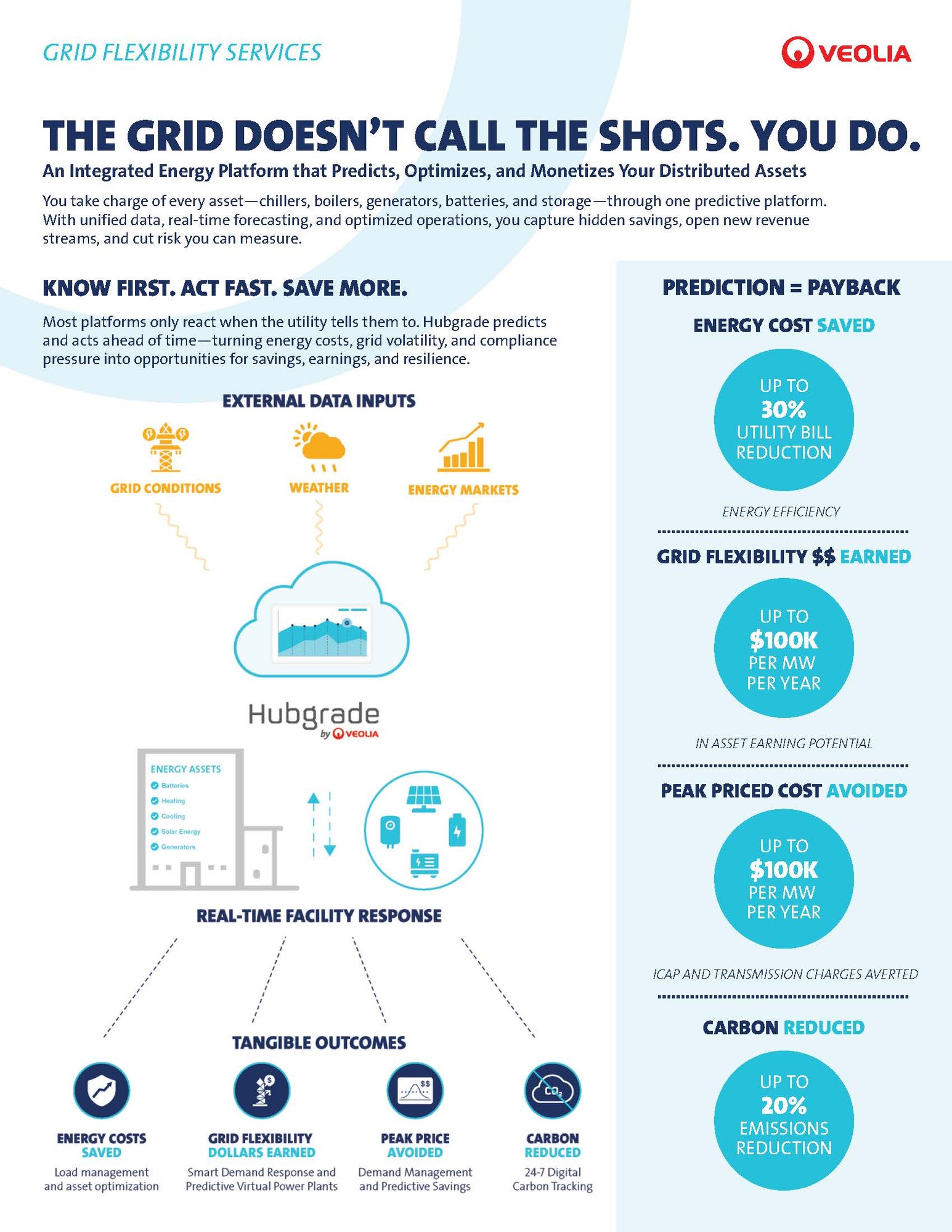
New Jersey is preparing to launch the next phase of its statewide energy storage incentive framework, known as the Garden State Energy Storage Program Phase 2. Based on regulatory signals, prior program design work and stakeholder discussions, this phase is expected to focus on behind-the-meter battery storage systems (BTM BESS) at commercial and industrial facilities.
While final program rules have not yet been released, there is already enough clarity around the direction of Phase 2 for energy users to begin planning. With rising capacity and transmission costs in New Jersey, we believe it is in the best interest of users to begin to consider BTM BESS, and this program would materially change the economics of behind-the-meter batteries and make 2026 a pivotal year for storage deployment in New Jersey.
This blog outlines what the program is, what is expected to change, who is most likely to benefit and what organizations should be doing now.
What Is the Garden State Energy Storage Program Phase 2?
This program is New Jersey’s long-term framework for deploying energy storage to support grid reliability, manage peak demand and control system costs.
The program was previously known as the Storage Incentive Program, or SIP. Phase 1 focused primarily on front-of-the-meter storage, using utility-scale projects to add bulk capacity to the grid. That phase is largely complete.
Phase 2, which is expected to be released mid-year in 2026, is anticipated to shift the program’s focus to behind-the-meter battery storage. The goal is to use customer-sited batteries to help manage peak demand, reduce transmission congestion and provide localized grid support.
In practical terms, this means New Jersey is preparing to compensate customers for allowing their batteries to function as grid-support assets, not just on-site optimization tools (i.e., peak shaving to reduce/eliminate capacity and transmission costs).
What Is Expected to Change Under Phase 2?
Although final details are still forthcoming, earlier New Jersey straw proposals and public discussions provide a strong indication of how Phase 2 is likely to work.
Garden State Energy Storage Program Phase 2 is expected to introduce:
- Incentives specifically for both in-front of and behind-the-meter battery systems
- Utility-coordinated dispatch during peak grid conditions
- Payments tied to verified battery performance, likely measured in kilowatts
- Multi-year compensation structures designed to provide revenue certainty
Under this model, customers would not receive incentives simply for installing a battery. They would be compensated for making that battery available to support the grid when demand is highest and to reduce peak charges.
This performance-based approach aligns incentives with actual system needs and significantly improves the financial case for behind-the-meter storage.
How Phase 2 Compares to Other Programs
The structure anticipated for Garden State Energy Storage Program Phase 2 closely resembles programs that already exist in the Northeast.
Massachusetts’ Connected Solutions program is often cited as a reference point. That program compensates customers for allowing utilities to dispatch assets such as batteries during peak events, with payments tied to delivered performance and offered under multi-year terms.
Earlier New Jersey proposals referenced a similar framework. While payment levels and program mechanics may differ, the underlying model appears consistent.
The key takeaway is structural, not numerical. Multi-year, performance-based incentives reduce risk and allow batteries to be sized, financed and operated around predictable revenue streams rather than relying solely on volatile market participation.
Why Phase 2 Matters for Battery Economics in New Jersey
Phase 2 is significant because it allows behind-the-meter batteries to stack multiple sources of value.
First, many New Jersey customers face capacity and transmission charges that are among the highest in the nation driven by a small number of peak hours each year. Batteries can reduce demand during those hours, producing recurring cost savings.
Second, Phase 2 would add a contractual incentive tied directly to grid performance. That turns batteries from a pure cost-avoidance measure into an asset that generates predictable income.
Third, batteries can also participate in wholesale energy and ancillary services markets. These revenues are variable, but they provide upsides that complement more stable incentive payments.
Together, these value streams can materially change project economics and make behind-the-meter batteries financeable for a much broader group of customers.
Who Should Be Paying Attention to Phase 2?
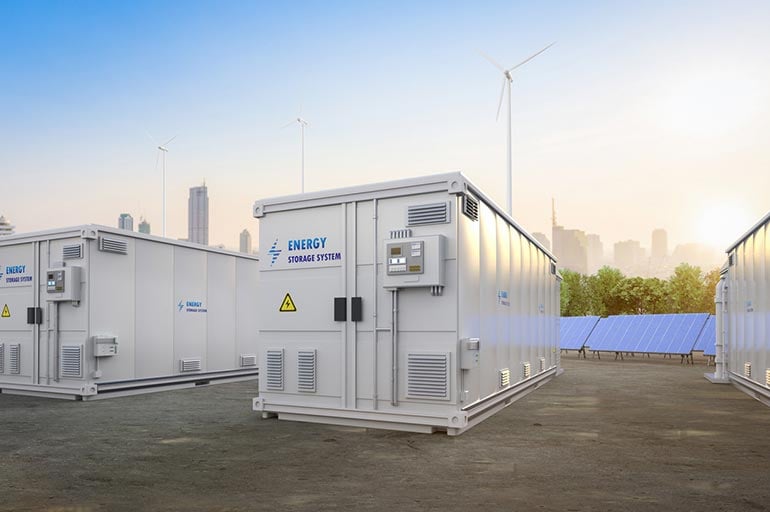
Garden State Energy Storage Program Phase 2 is not relevant to every energy user. It is most impactful for organizations with specific load and cost characteristics.
Customers most likely to benefit include:
- Facilities with high peak demand relative to average load
- Customers exposed to PJM capacity and transmission charges
- Energy-intensive manufacturers and processors
- Multi-site operators with facilities across New Jersey
- Organizations exploring third-party ownership or energy-as-a-service models
For these groups, batteries are increasingly about cost control, grid participation and long-term risk management, not just resilience.
Why Organizations Are Looking at This Now
When incentive programs like Garden State Energy Storage Program Phase 2 launch, participation often accelerates quickly. Program capacity may be limited, interconnection and permitting queues can grow and dispatch rules become fixed.
Organizations that wait until final rules are published often find themselves reacting instead of shaping outcomes. Those that begin analysis early are better positioned to move quickly and optimize system design once details are finalized.
Preparing now does not require committing capital. It requires understanding where batteries create value and how they would operate under a performance-based incentive structure.
What You Should Be Doing Before Phase 2 Is Announced
The right next step is preparation, not procurement. Organizations that expect to benefit from Phase 2 should already be evaluating:
- Peak demand drivers and load variability
- How a battery would perform during utility-dispatched events
- How incentives would interact with existing capacity and transmission costs
- Whether ownership or service-based models are the best fit
- Consider submitting an interconnection application in order for the project to be seen as “real” once the program is released
When Phase 2 is officially announced, the organizations that succeed will be those that already understand their exposure, the opportunity and their options, and ideally have started down the path of developing a BESS.